By Taylor McDaniel
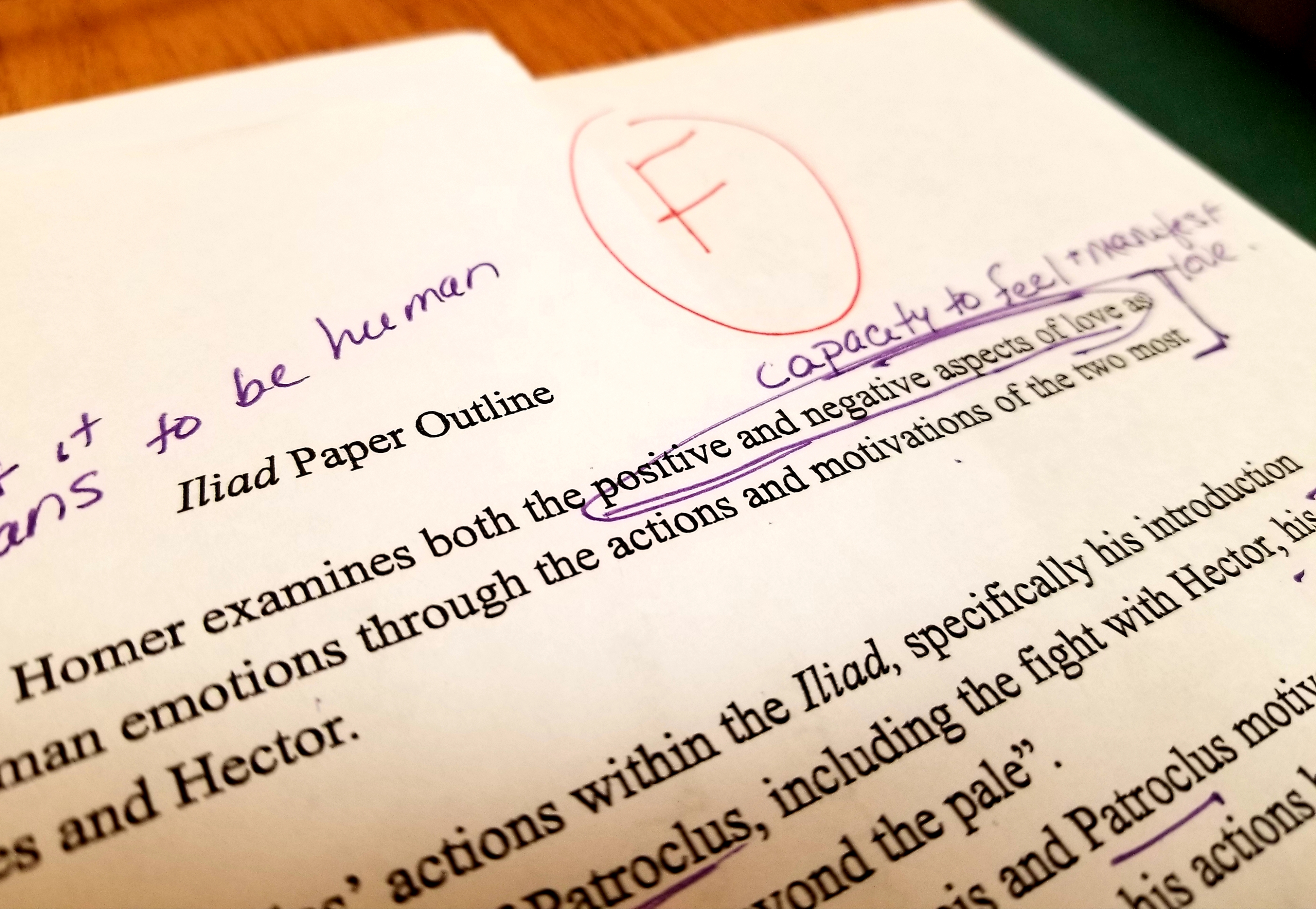
Plagiarism is on the rise.
Now more than ever, instructors are finding that their students are resorting to copy and paste instead of to the textbook. In a recent survey of over 71,000 undergraduate students conducted by the International Center for Academic Integrity, 62 percent of participants admitted to cheating on a written assignment.
According to Plagiarism.org, this form of cheating could be considered a criminal offense. By the letter of the law, plagiarism constitutes copyright infringement. However, colleges rarely decide to report acts of plagiarism because many cases are accidental, and intentional cases oftentimes prove difficult to prove. Instead, most prefer to handle cases of potential plagiarism in-house. Many institutions leave disciplinary action up to the discretion of individual instructors and the punishments can vary wildly from person to person.
“I think that there should be a warning for the first or second offense,” says Caitlin Dunn, a senior Creative Writing major. “[after that] I honestly think they should fail the class.”
At Belhaven University, instructors are responsible for the punishment of cheating students. As Dr. Donald Hubele, the chair of the English Department at Belhaven, states in his course syllabi, his punishment includes, “possible failure of the course.” He goes on to warn that, “The professor will file a report of the incident…with the offices of the Provost and the Dean of Students.” Another instructor in the department, Dr. Marylou Parrott, offers a similar punishment, “plagiarizing any written assignment will result in an automatic failing grade.”
It isn’t always easy to detect plagiarism and, in some cases, instructors can be wrong. This begs an important question: with the prevalence of cheating on college campuses, how can instructors accurately detect and verify possible incidents of plagiarism?
As it turns out, many instructors are turning to the same source that their students often use to cheat: the Internet.
“Turnitin and other programs check for plagiarism with past assignments,” says D’Lynn Clegg, a junior and English major at Belhaven. Turnitin is one of many websites which automatically search assignments against a database for plagiarism. Outside of manual searches, these kinds of tools are perhaps the best ways for instructors to catch cheaters.
“Turnitin and other programs check for plagiarism with past assignments,” says D’Lynn Clegg, a junior and English major at Belhaven. Turnitin is one of many websites which automatically search assignments against a database for plagiarism. Outside of manual searches, these kinds of tools are perhaps the best ways for instructors to catch cheaters.
Plagiarism, whether it is unintentional or not, is certainly a behavior that cannot be condoned in any setting—especially that of an educational institution—and justifiably deserves punishment. What remains to be seen, however, is how exactly instructors should verify any suspicions they may have about a student’s possible transgression, as well as whether colleges should think about implementing uniform policies regarding the matter instead of allowing teachers to make such judgement calls.
 com210news
Taylor, this is a really well done piece! Plagiarism is a huge issue and temptation for college students. Its so prevalent now that we often forget to be on guard for it. Choosing to use class syllabuses really helped prove your point. I think I agree with Dr. Hubele and Dr. Mrs. Parrot, plagiarism should result in a possible class failure.
LikeLike
I agree Taylor, plagiarism is on the rise and it needs to be stopped. Many students use each other’s work and the professors never know. This is a really interesting story. There’s so much information in your story that I didn’t know. I think that plagiarism should result in a failing grade
LikeLike
Well done post, Taylor! This is definitely a huge issue in the educational setting. It’s hard to detect or get around, but as often as it happens, there just be repercussions. You pointed out some interesting statistics that I never knew about. Good job!
LikeLike
Well written Taylor! Obviously plagiarism is a big deal in universities everywhere, especially with all the web sites and addresses that our generation has. I agree that it needs to be stopped and your blog post had a lot of good information in it about plagiarism. It was a good read! I agree with your points and that you are bringing awareness to this topic.
LikeLike
Taylor, I agree. Plagiarism is a serious offense. Students seem to have lost the ability to write their papers in their own words. They are losing the imagination and are not putting their own style into them. It’s a shame really that students are losing the confidence to express their knowledge and resort to taking from other sites and sources.
LikeLike