How Hospitals Fail to Properly Identify Patients

by Taylor McDaniel

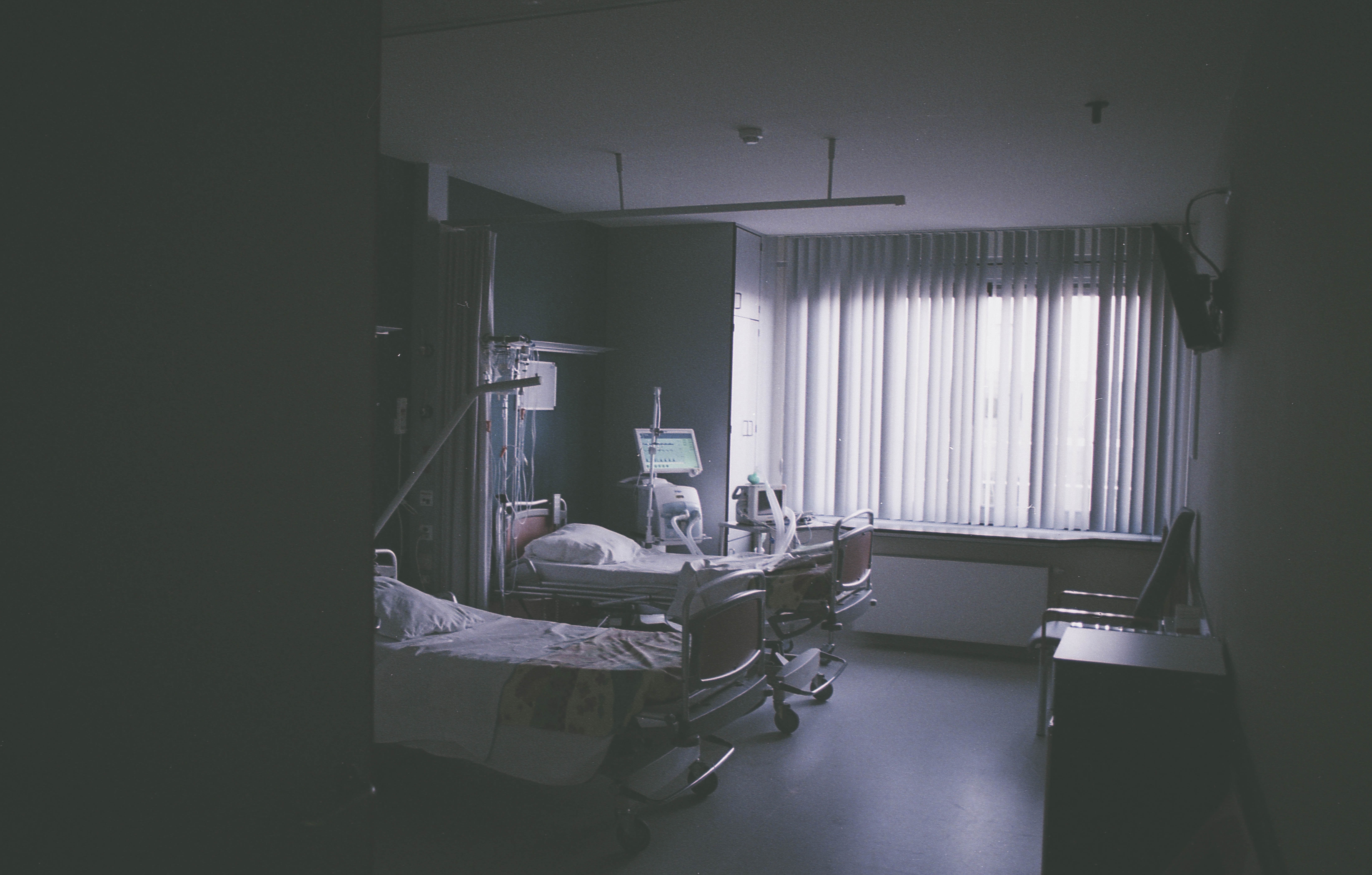
Unsplash.com Photo by Daan Stevens.

What would you do if the man you pulled off of life support wasn’t actually your brother? How would you react if the man you were planning a funeral for was actually a complete stranger?

This is the nightmare scenario currently playing out for one woman in New York City. It was July of last year when Shirell Powell, 48, received a call from doctors at St. Barnabas Hospital in the Bronx. Doctors told Powell that her brother had been brought into the emergency room after a drug overdose and was in a coma. When Powell arrived at the hospital, she could hardly recognize her brother. “He had tubes in his mouth, a neck brace, he was so swollen,” she said in an interview with The Post. “[But] he resembled my brother.”

This was not the truth, however, as Powell found out when she received a phone call from the New York Medical Examiner’s Office. The office had taken over the case to do an autopsy on her brother’s body, only to discover that Powell’s brother, Frederick Williams, was alive and well, incarcerated on Rikers Island for assault. The man who had died at St. Barnabas Hospital was actually Freddy Clarence Williams, a man with a similar name to Powell’s brother.
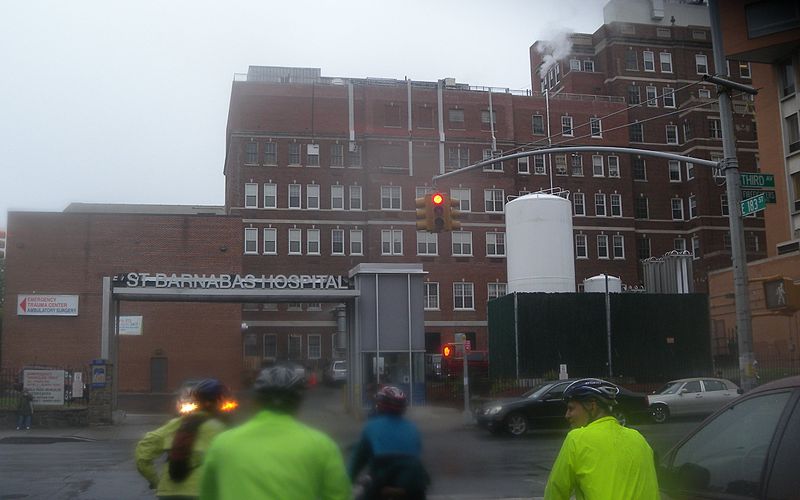
St. Barnabas Hospital. Photo by Jim Henderson

Now Powell is suing St. Barnabas for “severe emotional harm and injuries” caused by the misidentification. These misidentifications can happen for a variety of reasons, but are usually the result of a person being found alone, by a stranger, in a location that is not a home or vehicle. In most cases, the patient can easily be identified by personal belongings or IDs kept on their persons, but this is not always the case.

“Things [can be] misplaced in an emergency. There is so much stuff that goes on to the floor, so much stuff that is all over the counters,” said Respiratory Therapist Malissa McDaniel, a practitioner with over twenty years of experience in the medical field. “When we have somebody come in the emergency, like a level one trauma, and we’re trying to save them, we are so focused on our advanced cardiac life support or our advanced pediatric, or advanced neonatal. We all have jobs [to do].”

In the case of Powell vs. St Barnabas Hospital, the misidentification error came from the two men’s similar names. It should be noted, however, that Freddy Clarence Williams had his social security card on him during his admittance to the hospital and it is unclear at the moment as to why that document was not used to identify him.

The court has yet to decide who is at fault for the misidentification, or whether Powell was the victim of malpractice on the part of the hospital. Whatever the outcome of this case may be, it certainly serves as a reminder that one should always keep some form of photo identification on them in case of emergency.

Do you think that hospitals should be held accountable for improper patient identifications and any trauma that stems from that failure? Let us know your opinion in the comment section down below. If you would like to know more about the Powell v. St. Barnabas Hospital case, check out this interview that Powell gave to the New York Post or read the lawsuit filed by Powell’s attorney against St. Barnabas. If you are interested in learning more about the problem of patient misidentification, check out these reports by the Emergency Care Research Institute and the World Health Organization about the subject.


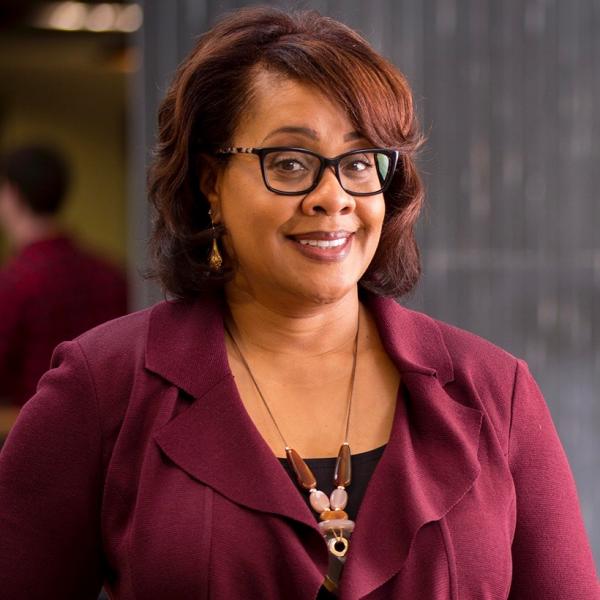
Forbes Top 50 Professor

By Katelyn Head

Once a Forbes Top 50 Business woman, now a life-changing educator to the students she teaches yearly, Dr. Tracy Ford pulls her hair from her face as she settles, ready for questions.

Many students are intrigued to know Dr. Ford. She teaches many subjects, such as Biblical Themes, Humanities, and Literature. She is also the Dean of Worldview Studies. “The Lord brought me to Mississippi, a place that I never imagined I would end up, especially being from the Boston Massachusetts area,” she says.

Continue reading Forbes Top 50 Professor

Fulfilling Dreams

images

What are some of your biggest motivators during trials and tribulations? For Lane, the motivation came from the will to excel as a mother, but also for herself. Lane accomplished both motherhood and college. After her children moved out and went on to the next phase of their lives, Lane decided to not give up one of her own dreams that she held not so long before her children were born. When asked why she enrolled in college in her forties, she said, “Just being the best and fulfilling some dreams that kind of got put to the side a little bit, always wanted to do my best, always wanted to excel, but maybe got onto a little bit different path. So being able to do those things that I had really wanted to do was motivation to do it and to do it as quickly as I could.” Continue reading Fulfilling Dreams

Life of an Ex-Immigrant

You get to understand hardship when you’ve watched your mother trying to make ends meet with any money she can find. The hassle of trying to pay bills and anything else that is thrown her way. These days single mothers have to be smart and know their way around. This is kind of hard when you’re new to a country where you don’t speak the language and have to start your life over with a five year old girl. “Everything I went through was worth it” said Geamom Souza, ex-immigrant and single mother.

Continue reading Life of an Ex-Immigrant

Hope is Taylor-made

Imagine being alone. Feeling like you have no on to talk to. According to Chadron State College’s Behavior Intervention Team, 45 percent of college students have felt hopeless. Dr. Cynthia Taylor encounters this hopelessness every day. And she’s here to help.

Studies show that 30 percent of students have problems with their school work due to a mental health issue. These issues can range from depression to anxiety, from ADHD to self-esteem issues, to just feeling like no one cares. Dr. Taylor, a Mental Health Therapist at Olivet Nazarene University in Bourbonnais, Ill., specializes in depression, anxiety, self-esteem, grief and adjustment issues.

“This is my calling,” she said when asked about her motivation for such a rigorous field. “To witness the changes that take place in my clients’ lives is what gives me joy!”

“Ever since she was a little girl, she was always so humble and helpful to other kids. She always wanted to make them feel like they were loved and enough.” Dr. Limmie Townsend said when asked about her long-time friendship with Dr. Taylor. “She’s always had a delightful personality and a loving spirit.”

Dr. Cynthia Taylor, along with her husband, Rev. Joel Taylor, son Rev. Jasper Taylor and wife, and daughter Jessica Taylor

Dr. Taylor grew up in Chicago Ill., going to church every Sunday and during the week. As the pastor’s daughter, she saw the humanity in others, the brokenness and vulnerability. Now the First Lady of her late-father’s church, Greater Mount Pleasant Missionary Baptist Church, she has a helping hand in the sanctuary and in the community. Dr. Taylor is open about her relationship with God and how he provides peace in such a demanding field of work. “I know I can carry my concerns, thoughts and requests to the Lord…he has not failed me yet! Prayer is something that I do every day and all day!”

A member of the American Association of Christian Counselors and the Illinois Coalition Against Sexual Assault, Dr. Taylor fights for the wellness of residences of the Chicagoland area. Although she caters to people of all ethnicities, to lessen the stigma and emphasize the importance of mental health in the African American communities is a major factor in her motivation.

According to Mental Health America, adult black or African Americans are 20 percent more likely to report serious psychological distress than adult whites. “Without mental health we cannot be healthy. Any part of the body, including the brain, can get sick.” Dr. Taylor is passionate about helping her clients and students achieved health from a holistic perspective.

When asked about the effects of mental illnesses on the social and academic performances of students, Dr. Taylor said, “Mental health issues have consistently increased over time in college students therefore causing challenges and stressors that impacts them socially and academically. The first year of college, students are faced with a rollercoaster of emotional changes that are often correlated to the stress caused by transitioning to college life.” However, Dr. Taylor suggests that receiving treatment; counseling and if necessary medication, can assist with a better college experience and mental health outcome.

Studies show that a major part of wellness as a whole is self-care. This may include acts such as painting, keeping a journal, praising yourself when needed, even just taking a hot bath. When asked about her methods of self-care after a stressful day, Dr. Taylor replied, “Date nights with my husband, family time and vacationing, and just plain old “me” time by going to the spa, for manicures and pedicures, various types of massages to lessen the likelihood of burnout and relaxing at home is how I stay grounded.”

Mental health is an aspect of overall health that is severely under-estimated. According to Dr. Taylor and many other mental health therapists and physicians, without proper treatment, mental health conditions can worsen and make it hard to live and function from day to day. However, there is hope, and people like Dr. Taylor are here to help you live whole and achieve the most in your life.


A Small Town Professor’s Plans to Build His Own Tiny Home

Dr. Randall Smith is holding up two of his books on Tiny House Living and Construction.

A small town professor and the Department Chair of the Creative Writing Department at Belhaven University, Dr. Randall Smith has decided to tackle the challenge of building his own tiny house once the school lets out for the summer. While watching videos he found on YouTube of people building their own tiny homes, what has stuck out to him about the tiny-house movement is that it gives him the ability to downsize. With the promise of having fewer possessions and responsibilities and more opportunities for experiences, Dr. Smith is fully committed to the idea of owning his own tiny home.

Continue reading A Small Town Professor’s Plans to Build His Own Tiny Home

A Portrait of the Artist as a Young Woman

By Taylor McDaniel

Bethany Morrison, Opening of the Student Invitational Art Exhibition

At the opening of the Student Invitational Art Exhibition, Bethany Morrison descends the spiral staircase into the crowded art gallery. As she reaches the bottom, a woman approaches her and  Bethany flushes red and smiles as she shakes the woman’s hand. She leaves the woman behind, weaving her way through the crowd and deeper into the gallery.

Continue reading A Portrait of the Artist as a Young Woman

Never Too Young to Be a Hero

Belhaven student Samuel Oh was once awarded for saving a man’s life.

Samuel Oh is a junior biblical studies and intercultural studies major at Belhaven University. Many around campus know him because of his involvement in Fellowship of Christian Athletes on campus and the Resident Assistant program. Only a few know about the heroic act that defined his teenage years.

The journey to learn Samuel or better known as Sam Oh’s story began with a Facebook post on April 11th asking for crazy or unusual stories students from Belhaven had that they would like to share for a news story. Numerous replies came in ranging from an unusual job experience to swimming with sharks. However, near the end of the search for a story, Samuel Oh shared a portion of his story. “I got an award from the government of Guam for saving someone’s life.”

Continue reading Never Too Young to Be a Hero

Quiet Time in the Hood

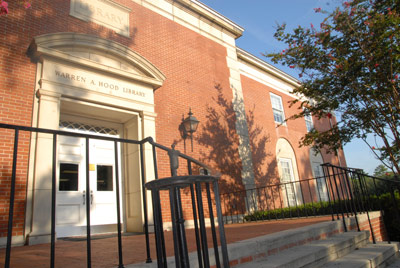
I’m sitting at the Warren Hood Library on the campus of Belhaven University. Like all libraries, this one is quaint and peaceful. I chose to sit at my favorite section in the very back of the first floor. There are three groups of working stations, all complimented with two desks on each side.

I enjoy sitting at the last one. My desk is made of dark brown wood with a shelf propped on the back of the desk. There are two privacy pieces, on which the left one is carved with scratches that may have been made by a wooden pencil sometime in the past.

The atmosphere here is calm and soothing. It’s quiet enough to concentrate, but loud enough not to get lost in your thoughts. I can hear chatter from the workers at the front desk accompanying students. I can also hear the functioning printers and copiers in the distance. There is a faint sound of keyboard keys tapping.

However, it doesn’t sound like the keyboard keys of a laptop, but the “old fashioned” keys that make slightly harsh sounds when tapped on, indicating that one of the students are using the desktop computers provided by the library in the front.

I can smell old books and dust, a smell I find comfort in. I can also smell the citrus green tea I purchased at the Shoebird Cafe in the Student Center. To the left of me are a set of ten or more bookcases, with what seems like thousands of books on them.

The colors of the books range from brown, to red, to various shades of blue and green. Some have been worn by time, indicated by the numerous tears of the fabric on the top and bottom corners of the books. Some have writing of gold ink on the side. and some have silver. On the side of the bookcases, there are arranged numbers and letters, presumably for location purposes. Some books about law, others about nature, and others about mathematics.

Where do you like to spend your quiet time?

Three hurricanes, nine grandchildren, one great grandchild and a government- issued FEMA trailer

Three hurricanes, nine grandchildren, one great grandchild and a government- issued FEMA trailer is what Winette Thornton recalls as her worsts experience and her best accomplishments.

Winette lived in Pascagoula, Mississippi for a period which appears to not be a good residency area for the months of May to November since that is the Atlantic hurricane season. Thornton remembers these hurricane experiences as if it were just yesterday. She says she remembers preparing for the storm to come in early morning on Monday of September 1998 but as far as they were concerned, it was just going to be a tropical depression and it was their plan to weather it.

“We had water coming into our house and we had to leave in the middle of the storm and go to our neighbors house which was higher ground,” Thornton states. “We had to move our vehicles along with whatever possessions we could get out in such quick of time.”

She added, “The next morning, we actually had to go to our house on a boat. We had about four feet of water in our home. We lost all of our furniture and everything.”

According to the National Weather Service, 80 houses were damaged and 40 were completely damaged and destroyed from the hurricane just on the coast. While Winette and her family’s house did in fact flood during Hurricane George, she remembers being grateful after seeing the aftermath along the gulf coast where she lived at the time.

“George affected our family a great bit. We had to live in an RV for about 6 months and when our house got cleaned out our daughter and her family had to move in with us. They lived in one room with their whole family and all their belongings that they had left. It was a very trying time for our family,” Thornton remembers.

One of the biggest obstacles that Winette Thornton and her family had to jump over from mother nature was Hurricane Katrina. She remembers planning to stay in their home for the hurricane in August of 2005 until their granddaughter, who was terrified, talked them out of it she says.

Winette claims to remember Katrina the easiest, “We did not stay in our home, we took our dog and left our bird. We did not realize we would have over five foot of water. When we came home, we could not even get to our road.” She recalls “Our furniture, refrigerator and everything was just flipped up side down in side of our house.”

According to the National Weather Service, where Winette lived at the time they received around a 20-foot storm surge from the ferocious Hurricane Katrina which is a historic statistic.

“We were not able to move back into our home after Katrina. We moved in with our daughter 40 miles south. We received a government-issued FEMA trailer six months after the storm hit which we lived in behind my daughters house for about seven months while we built a new house that was ready to be moved into,” She added.

Rebuilding a home not only once but twice due to uncontrollable circumstances shows a personality trait such as resiliency in Winette Thornton and her daughter Robin describes her as loving and Christian-like.

“The best personality trait to describe Winette is that she is very loving and Christian grandmother to her entire family. She loves to talk a lot which makes her easy to get along with,” she jokes.

“Some of my favorite memories of her are her being at all of the grandchildren’s events that they are involved in whether it is football, baseball or softball its always anything and everything they are involved in,” Robin adds.

When asked what her biggest accomplishments are….

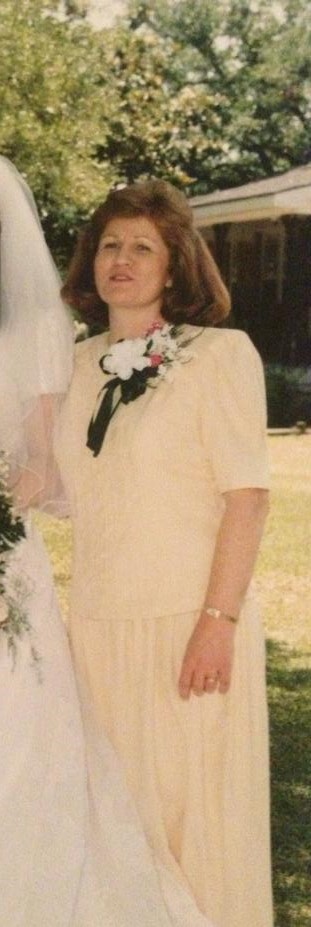
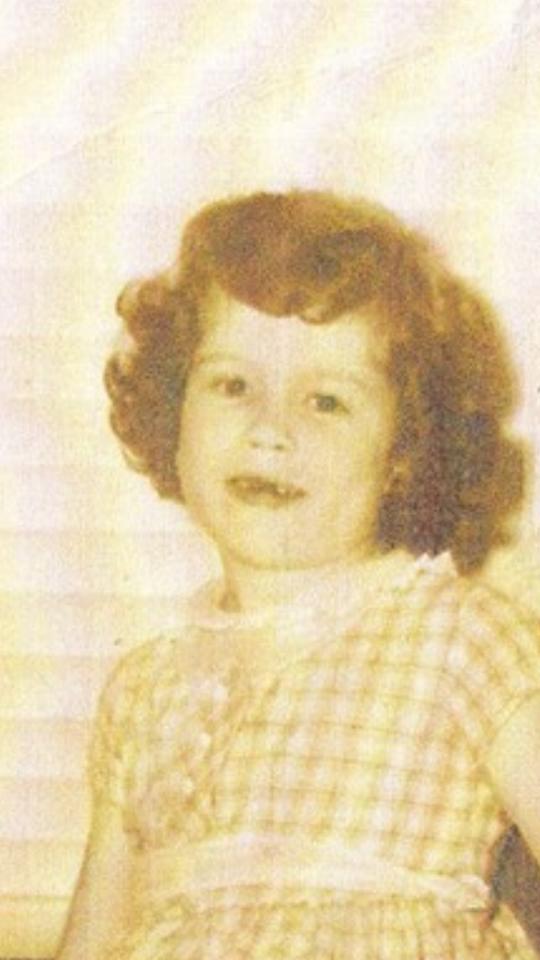
Winette humbly replies, “Well I have had a lot, but I went to college for two years and got my associate degree went to work then got married and had three kids. I now have nine grandchildren and one great grandchild. They are my life and I love them dearly so I would consider my family my greatest accomplishment.” erin wedding 1996 (2) 1997

nana1

1954

https://youtu.be/5k8LyyaV_UA

Winette Thornton (first)

Robin Harrell (last)